

Empowering the Next Generation for Vaccine Confidence
As a public health unit, one of our primary goals is to increase vaccination awareness and uptake in our communities to improve population health and reduce disease. This includes seasonal vaccines that provide protection during respiratory illness season, such as influenza and COVID-19 vaccines. However, many vaccines don’t reveal their true value until years, sometimes decades, down the road.
The HPV, hepatitis B, and meningococcal vaccines are three vaccines included in the Grade 7 school vaccination clinics, offered to every student in grade 7. These vaccines protect against diseases that may not affect students until later in life and can lead to serious health outcomes, including multiple types of cancer, liver disease, and brain damage. These vaccines are given in grade 7 because research shows vaccination early in life and before exposure to these pathogens provides the best immune response, and therefore the strongest protection.
The Challenge: How to Engage Youth in a Meaningful Way
However, we’re met with a challenge: communicating future health benefits to youth can be difficult. Let’s face it, hearing about vaccines from the clinical, public health-y people doesn’t always land. No cap (see what we did there? Cringe.).
Students want to hear from their peers—people who look like them, speak like them, and are facing the same life experiences. This concept of peer influence, combined with the need to share accurate vaccine information across communities, is what helped shape our Youth Vaccine Champion project.
In Fall of 2025 WDG Public Health applied for a Sheela Basur Centre Grant and was successful! With the grant, the goal was to pilot a vaccine community champion program made up of youth ages 12-26 from Wellington, Dufferin, and Guelph. These youth would work collaboratively with WDG Public Health to equip youth with accurate vaccine information and support them in delivering outreach initiatives to their peers and other community members, to ultimately reduce vaccine misinformation and build long-term trust in public health messages.
Youth Recruitment
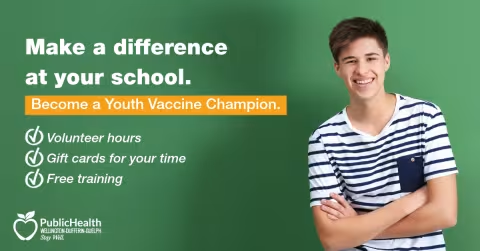
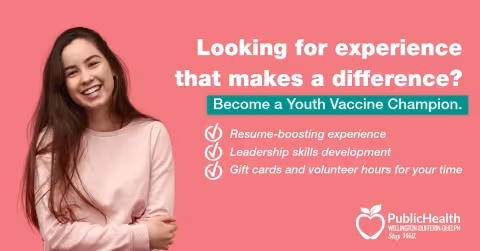
Recruitment of youth champions was mainly achieved through social media and word-of-mouth promotion with community partners, including Upper Grand and Wellington Catholic District School Boards. Overall, 21 youth (average age: 16 years) were recruited between January and March 2026.
Training Sessions
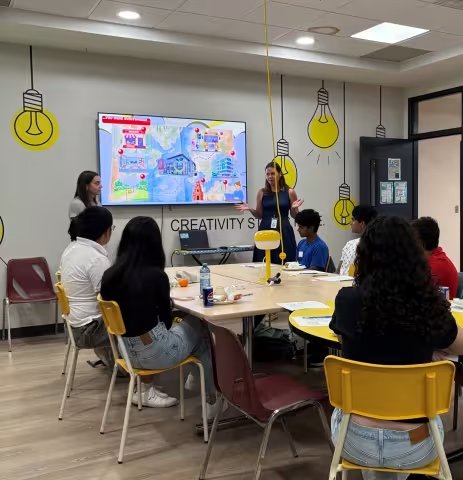
Of the 21 recruited youth, 19 completed training. Youth had to complete two training sessions in March – a 1-hour virtual session and a 2.5 hour in-person session. Both trainings provided education about vaccines and vaccine-preventable diseases, as well as activities to practice and build communication and leadership skills. Before and after training, youth were asked to complete a survey to measure any changes in their knowledge about vaccines as well as confidence in disseminating information in the community.
Youth Outreach Activities
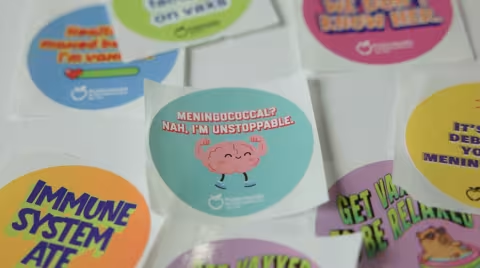
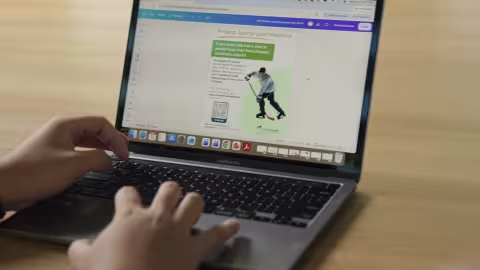
The community outreach activity period occurred from March to July. We encouraged youth to determine what types of outreach activities were best suited for them and their established communities and networks. Some examples included: setting up information booths and distributing resources at community centres, schools or their religious institution, speaking to their health classes, delivering announcements or hanging posters at their school, or simply having a conversation with a friend, family member, teacher or coach who had questions about vaccines. During this time, WDG Public Health hosted monthly meetings with the Champions, giving them the opportunity to connect with each other, ask questions, and brainstorm other outreach ideas. WDG Public Health and champions even collaboratively created vaccine resources like postcards, posters and stickers post cards to support outreach.
Results
Our youth champions led a total of 40 outreach activities, engaging with over 750 community members!
The outreach showed promising results:
- 90% of youth-led outreach activities were rated by youth champions as having a moderate, strong, or very strong impact in their communities.
- 1 in 3 people asked questions about vaccines or vaccine-preventable diseases.
- Approximately 1 in 10 people expressed interest in getting vaccinated or asked where or how they could get the vaccine.
- After training, youth champions were nearly five times more likely to pass the vaccine knowledge portion of the survey.
Youth champions also reported receiving questions and concerns about vaccines from community members and felt confident using the trusted information and knowledge they had gained to respond. Overall, they described the experience as rewarding and felt proud to share information that could make a difference in their communities.
What Did We Learn from this Project?
Giving youth accurate information, tools and confidence to engage with their established communities can be a powerful framework to reach an often hard-to-reach audience. With the success of the Youth Vaccine Champion project, we hope to implement the same youth-led philosophy in future programs and opportunities.
Hear more from some of our Youth Vaccine Champions
To wrap up our project, we invited several of our Youth Vaccine Champions to share their experiences in their own words in a video. In the video, they reflect on what they learned, why peer-to-peer conversations matter and what it was like to help others feel more informed and confident about vaccines.
This project was funded by Public Health Ontario, as part of the 2025-2026 Sheela Basrur Centre Grant: Fostering Trust and Countering Misinformation in Public Health.