
Outdoor Air Quality
Use the ClimateSafe Map to find cooling and clean air spaces, drinking water fountains, splash pads and pools across Wellington-Dufferin-Guelph.
Poor air quality can have negative health impacts, particularly on your heart and lungs, and may worsen many chronic diseases. Some people are more vulnerable to poor air quality including young children, the elderly, outdoor workers, sports enthusiasts and people with underlying respiratory and cardiovascular conditions.
How to monitor air quality
The Air Quality Health Index (AQHI) is a scale designed to help you understand what the quality of the air means to your health. The AQHI is a number from 1 to 10. The higher the number, the greater the health risk.
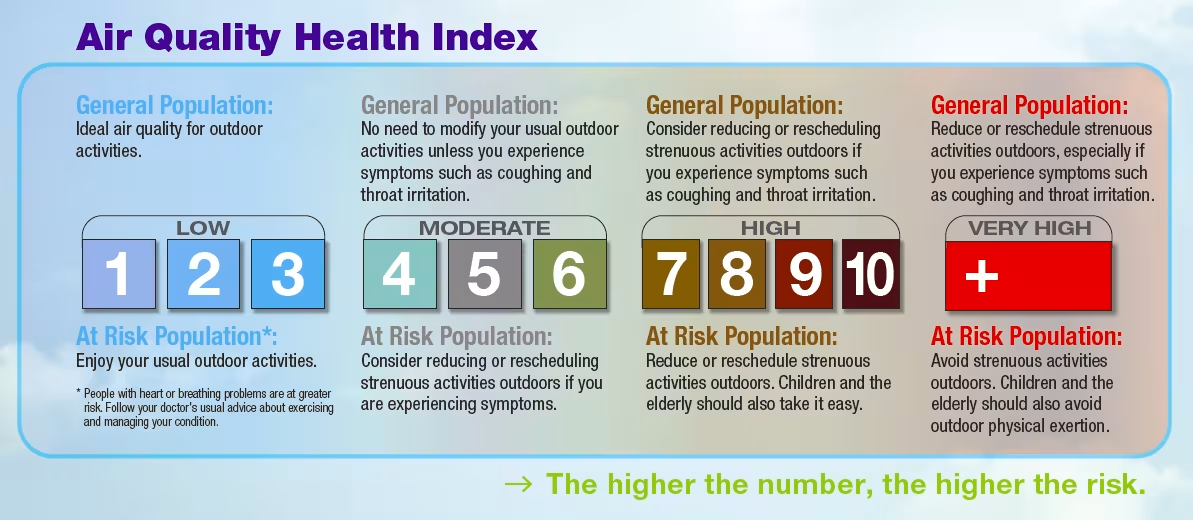
Prepare ahead of time by checking for heat warnings. Before heading outdoors, check:
- Check the AQHI forecast daily, especially from April to September.
- Download the WeatherCAN app to get local Environment Canada warnings.
- Follow the advice provided for the AQHI number that is forecast
Environment and Climate Change Canada may issue Air Quality Warnings when poor air quality is expected to pose a risk to health. Air quality warning alerts now include a colour-coded banner:
| Colour | Meaning |
|---|---|
| Yellow | Poor air quality may cause moderate, localized or short-term health impacts. People at higher risk should take extra precautions. |
| Orange | Poor air quality is likely to cause significant health impacts. Impacts may be more widespread, affect daily activities or last several days. |
| Red | Very dangerous and possibly life-threatening conditions are expected. Serious and widespread health impacts are possible and urgent protective actions may be needed. |
Always read the full weather alert. It includes information about timing, location, expected impacts and actions you can take to stay safe.
How wildfire smoke affects air quality
Smoke from wildfires can be a major source of air pollution. Wildfire smoke may be carried hundreds or thousands of kilometres from the fire. Some of the key factors that affect wildfire growth and spread are:
- Hot, Dry Weather: Hotter temperatures and dry conditions for an extended period make forests more flammable by drying out trees, leaves and twigs.
- Storms and Lightning: Warm temperatures can lead to more summer storms and lightning strikes, which often start wildfires.
- Windy Conditions: Strong winds help fires spread faster.
How to reduce your exposure
- Limit outdoor activities and strenuous physical activities
- Learn how to create a clean room to protect indoor air quality
- Learn how to choose and use an air purifier to filter wildfire smoke
- Build a do-it-yourself air cleaner
- Wear a well-fitted respirator and know how to use it
Poor air quality and extreme heat
Poor air quality often happens in the summer, when temperatures may be extreme. Heat and wildfire smoke are both health risks. When they occur at the same time, prioritize keeping cool, as overheating can be more immediately dangerous.
If your home is too hot, seek an air-conditioned indoor space with cleaner air. Use the ClimateSafe Map to find cooling and clean air spaces and confirm hours before travelling.
When possible:
- Reduce strenuous outdoor activity.
- Use a portable air cleaner in the room where you spend the most time.
- Keep windows and doors closed when smoke is present, unless indoor temperatures become unsafe.
- Check on people who may be isolated or without air conditioning.