
Image
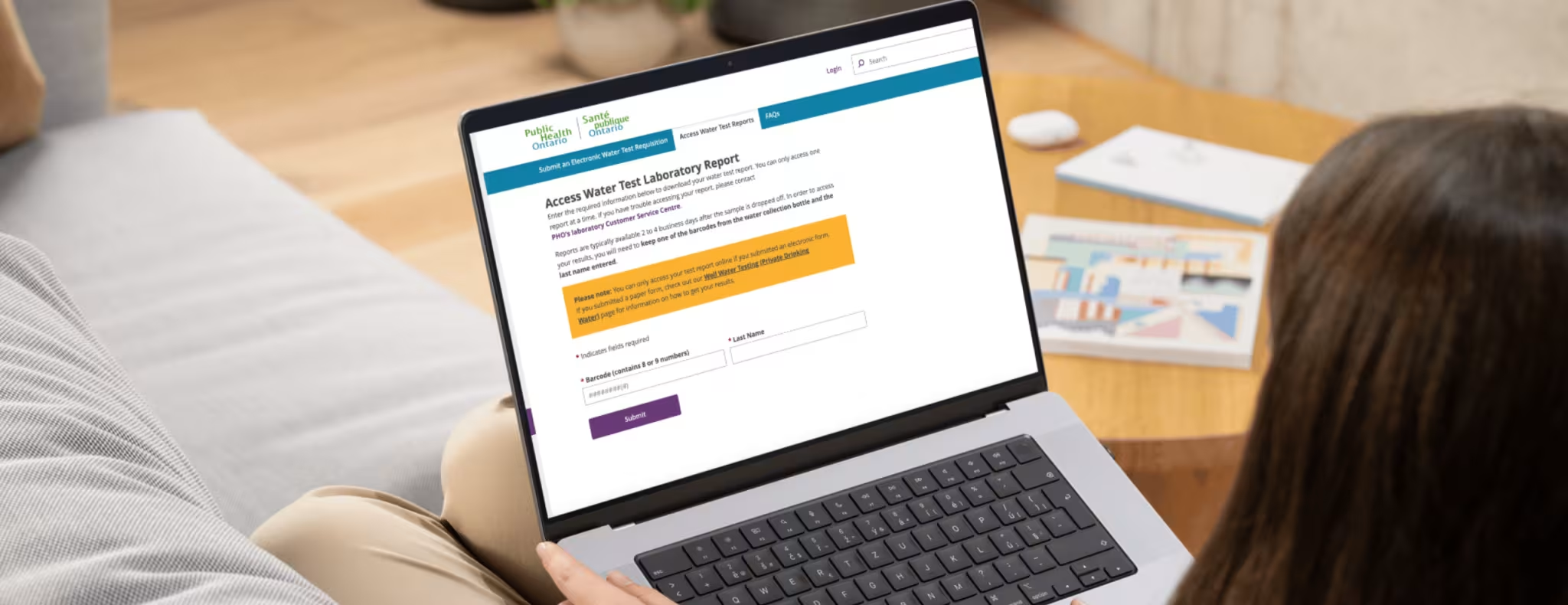
Understanding Your Well Water Test Results
If you have recently received your well water test results, this page will help you understand what they mean and what to do next.
Private well water is tested for indicator bacteria, including total coliform (TC) and E. coli. These bacteria help show whether your water may be contaminated.
- Total coliform (TC) bacteria are commonly found in soil, plants, and surface water. Their presence may mean contaminants can enter your well.
- E. coli bacteria come from human or animal waste and indicate fecal contamination.
The table below explains what your results mean and what steps to take if your water may be unsafe.
| Result | What it means | Status | What to do |
|---|---|---|---|
TC = 0 E. coli = 0 | No evidence of bacterial contamination | ✅ Safe to drink | Use as normal. Continue to test often to keep your well water safe. |
TC = 5 or less E. coli = 0 | No significant evidence of bacterial contamination | ✅ Safe to drink | Retest with 3 samples at least 1 week apart to confirm the water supply is stable. |
| TC = 6 or more | Significant evidence of bacterial contamination | ⚠️ May be unsafe | Check your well for possible sources of contamination and retest. |
| E. coli = 1 or more | Evidence of fecal contamination | ❌ Unsafe to drink | Stop using your well water. Use bottled or municipal water. Contact public health and retest. Do not drink until results are safe. |
| NDOGN - No Data: Overgrown with Non-target | Sample heavily contaminated with bacteria often found in the environment | ❌ Unsafe to drink | Stop using your well water. Use bottled or municipal water. Contact public health and retest. Do not drink until results are safe. |
| NDOGT - No Data: Overgrown with Target | Sample heavily contaminated; total coliform and/or E. coli may be present | ❌ Unsafe to drink | Stop using your well water. Use bottled or municipal water. Contact public health and retest. Do not drink until results are safe. |
Contact us
If your water is unsafe or may be unsafe to drink, a Public Health Inspector can help you interpret the results of your water test and provider more information about what to do.
More information
The Ontario Public Health Laboratory (PHO Lab) provides additional information about drinking water bacteria:
Related Pages
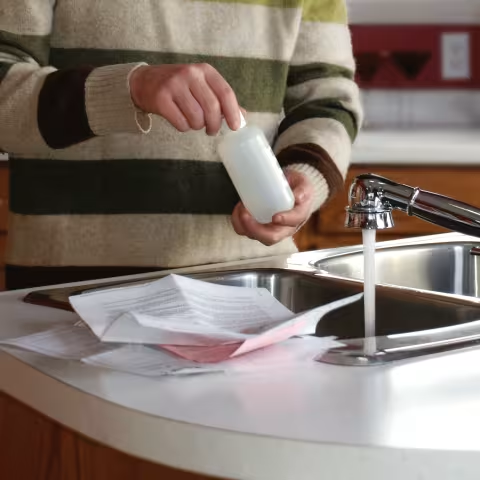
Well Water Testing
Nearly half of residents in Wellington and Dufferin rely on private wells. Learn how to test your water for bacteria, understand your results and keep your well safe with proper maintenance and disinfection.
Well Water Testing Dashboard
This dashboard provides data on the rate of well water testing and contamination in Wellington-Dufferin-Guelph.